Maximizing Your Results with the Inflated St Patrick's Tumbler Design PNG
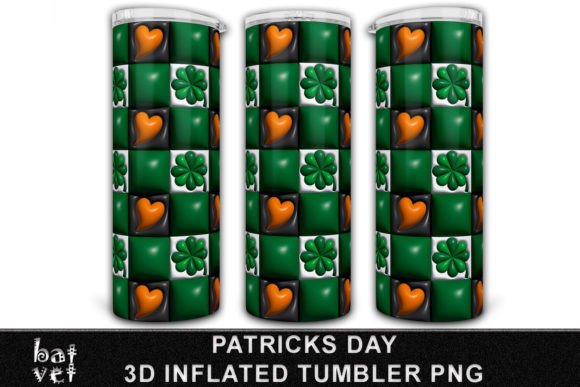
The allure of creating custom drinkware for Saint Patrick's Day is undeniable, especially when you have access to vibrant, eye-catching graphics like the Inflated St Patrick's Tumbler Design PNG. This specific style, featuring a 3D inflated bubble effect combined with classic plaid, shamrocks, and hearts, offers a modern twist on traditional holiday motifs. Whether you are a seasoned sublimation professional or a hobbyist launching your first small business venture, understanding how to properly utilize this digital asset is the difference between a product that sells out and one that ends up in the clearance bin. The design itself is high-resolution, typically provided at 300 DPI with print dimensions around 9.3x8.2 inches, specifically tailored for skinny 20 oz tumblers. However, possessing the file is only the first step; the real value lies in execution.
Many creators rush into production without fully vetting their workflow, leading to avoidable frustrations. A common misconception is that a "print-ready" file requires zero preparation on the user's end. While the Inflated St Patrick's Tumbler Sublimation 3D Tumbler Wrap is indeed high quality, skipping the initial setup steps can compromise the entire project. For instance, failing to unzip the downloaded archive correctly or saving the file in a convoluted directory structure can lead to lost assets mid-project. When you receive the file, the instruction to "unzip and save before use" is not merely a formality; it is a critical quality control measure. Working directly from a compressed folder or a temporary download directory can sometimes cause software glitches where the image resolution appears lower than it actually is, or color profiles fail to load correctly in your design software.
Avoiding Resolution and Scaling Pitfalls
One of the most frequent errors encountered when using sublimation wraps involves improper scaling. Because the Inflated St Patrick's Tumbler Design PNG is designed for a specific "skinny" 20 oz tumbler, the aspect ratio is crucial. Beginners often make the mistake of stretching the image to fit a different tumbler size, such as a standard 20 oz or a 30 oz model, without adjusting the design elements. This distortion ruins the "inflated" 3D bubble effect, making the shamrocks and hearts look warped and unprofessional. The 3D illusion relies on precise curvature and proportion; if you stretch the width, the bubbles lose their depth, and the plaid pattern becomes uneven.
To avoid this, always verify the physical dimensions of your blank before importing the graphic. If you are using the provided 9.3x8.2 inch print size, ensure your printer settings are set to "Actual Size" or "100%" rather than "Fit to Page." Even a slight reduction in scale can leave unsightly white gaps on the tumbler, while enlarging beyond the native 300 DPI resolution will result in pixelation. A better approach is to measure the circumference and height of your specific blank and use your design software to create a guide layer. Place the PNG over this guide to confirm alignment without altering the original file's properties. If you need to adapt the design for a different vessel, it is far better to recreate the background elements vectorially than to raster-stretch a PNG.
Color Management and Printer Calibration
The vibrancy of the green plaid and the pop of the red hearts in the Saint Patrick's Day Skinny 20 Oz Tumbler wrap depend heavily on accurate color management. A widespread oversight is neglecting to calibrate the printer profile to the specific sublimation paper and ink brand being used. Many users assume that what they see on their monitor is exactly what will transfer onto the metal. In reality, monitors emit light (RGB), while sublimation prints rely on reflected light (CMYK). Without a proper ICC profile, the lush greens of the shamrocks can turn muddy, and the "inflated" highlights may appear dull rather than glossy.
Furthermore, the mirror image setting is non-negotiable yet frequently forgotten. Sublimation transfers must be printed in reverse so that when wrapped around the tumbler, the text and orientation are correct. Printing the Inflated St Patrick's Tumbler Design PNG without mirroring it results in backward text and misaligned patterns that cannot be fixed after pressing. Before committing to a full batch, always print a single test strip on regular paper. Wrap this test print around your blank to check for seam alignment and color accuracy. This small step saves significant material costs and prevents the disappointment of ruining expensive coated tumblers.
Heat Press Techniques for 3D Effects
Even with a perfect print, the application process can make or break the final product. The "3D Inflated Sublimation Bubble Wrap" aesthetic relies on sharp contrasts and clear definitions. A common mistake during the heat press phase is inconsistent pressure or temperature fluctuations. If the heat press does not apply even pressure across the entire surface of the skinny tumbler, parts of the plaid pattern may appear faded or blurred. This is particularly problematic with tapered tumblers where the diameter changes slightly from top to bottom.
Using the correct time and temperature is essential, but so is the use of high-quality heat-resistant tape. When wrapping the sublimation paper around the tumbler, ensure there are no wrinkles or air pockets. Any gap between the paper and the coating will result in ghosting or blurry lines, which destroys the crispness of the 3D bubble effect. Some creators mistakenly pull the paper too tight, causing it to tear or shift during the press. The goal is a snug, smooth fit. Additionally, allow the tumbler to cool completely before removing the paper. Peeling the paper while the tumbler is still hot can cause the ink to smear, ruining the intricate details of the hearts and shamrocks.
File Organization and Workflow Efficiency
Beyond the technical aspects of printing and pressing, organizational habits play a massive role in long-term success. The instructions accompanying the download emphasize remembering or editing the file name and location. This advice is often ignored until a creator needs to reorder a popular design months later and cannot locate the original high-res source. Relying on low-resolution screenshots or previously printed copies leads to degraded quality in future runs.
Establish a systematic filing system immediately upon download. Create a dedicated folder for "Saint Patrick's Day Assets" and subfolders for "Raw PNGs," "Edited Designs," and "Printed Proofs." Rename the file to include key details, such as Inflated_StPatricks_Skinny20oz_300DPI.png. This practice ensures that whether you are a freelancer managing multiple client orders or a small business owner stocking inventory, you can instantly retrieve the correct asset. It also facilitates version control if you decide to tweak the design slightly for different product lines, such as mugs or coasters, ensuring you always start from the highest quality source.
Ultimately, the Inflated St Patrick's Tumbler Design PNG is a powerful tool for creating festive, high-demand products. By respecting the technical requirements of the file, calibrating your equipment, and maintaining an organized workflow, you elevate your output from amateur to professional. Take the time to understand the nuances of the 3D sublimation process, and you will find that the effort invested in avoiding these common pitfalls pays off in customer satisfaction and repeat business.