Integrating 3D Pastel Leaves into Professional Creative Workflows
In the fast-paced world of digital design and print-on-demand (POD) entrepreneurship, the efficiency of your asset library directly correlates with your output quality and speed. 3D Pastel Leaves represents more than just a collection of botanical illustrations; it is a strategic resource designed to streamline the production phase of various creative projects. When you acquire a high-resolution asset pack, you are not merely buying images; you are investing in a component that fits seamlessly into a broader workflow involving planning, execution, and quality control. Understanding how to leverage these specific assets—characterized by their soft color palette, three-dimensional depth, and technical specifications—allows professionals to reduce preparation time and maintain consistency across diverse deliverables.
Technical Specifications as a Foundation for Quality
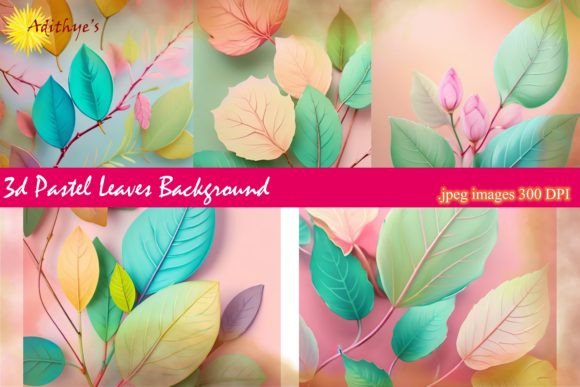
The utility of any digital asset begins with its technical integrity. This specific collection arrives as a single Zip folder containing 5 images in .jpeg format. While the file count may seem modest, the resolution is the critical factor here. Each image boasts dimensions varying anywhere above 4000 pixels with a print-ready 300 dpi. In a professional context, these numbers dictate where and how the assets can be deployed without degradation.
For entrepreneurs managing Print on Demand businesses, the 4000-pixel threshold is essential. It ensures that when these leaf designs are placed on large-format products like tote bags, throw pillows, or wall art, the edges remain crisp and the pastel gradients do not pixelate. The 300 DPI standard is non-negotiable for physical goods; anything lower risks appearing blurry upon printing, which can damage a brand's reputation for quality. By starting with assets that already meet these rigorous standards, creators bypass the often time-consuming and quality-compromising step of upscaling images. This allows the workflow to move immediately from concept to mockup generation.
Strategic Placement in the Design Process
Integrating 3D Pastel Leaves into a project requires understanding where they fit within the timeline of creation. These assets are versatile enough to serve different functions depending on the stage of the project.
Pre-Production and Mood Boarding
Before a single line of code is written for a website or a sketch is made for a product line, the visual direction must be established. The soft, muted tones of pastel leaves make them ideal for establishing a calming, organic, or spring-themed aesthetic. Marketers and brand strategizers can use these images during the mood boarding phase to communicate a specific vibe to clients or team members. Because the images possess a 3D quality, they add texture and depth to flat presentations, helping stakeholders visualize the final look and feel more accurately than simple color swatches could.
Active Production and Asset Layering
During the active design phase, these JPEGs function as primary or secondary elements depending on the medium. For t-shirt designs, the 3D effect provides a sense of realism that stands out against fabric textures. Designers can layer these leaves over solid colors or subtle patterns to create depth. Since the files are in JPEG format, they are universally compatible with industry-standard software such as Adobe Photoshop, Illustrator (via embedding), Canva, and Affinity Designer. This compatibility reduces friction in the workflow, ensuring that files open instantly without conversion errors.
For greeting cards and invitations, the pastel palette offers a sophisticated alternative to bright, primary colors. The assets can be used as central focal points or as border elements to frame text. The high resolution ensures that even if the designer chooses to crop a specific section of a leaf to create a unique pattern, the remaining detail remains sharp. This flexibility is crucial for scrapbooking enthusiasts and professional paper crafters who need assets that can be manipulated without losing fidelity.
Post-Production and Scaling
Once a core design is finalized using one of the five images, the workflow shifts to adaptation. A single 3D Pastel Leaves image can be repurposed across multiple channels. A design created for a notebook cover can be resized and adjusted for a matching gift card or a social media graphic. This ability to scale a single asset across a product line enhances brand consistency. For small business owners, this means less time sourcing new images for every new product and more time focusing on marketing and sales strategies.
Workflow Integration and Compatibility
The true value of this asset pack lies in how it interacts with other tools and methods in your existing toolkit. For freelancers and agencies, time management is paramount. Having a pre-curated folder of high-quality, themed assets eliminates the search fatigue associated with stock photography sites. Instead of spending hours filtering for "pastel," "3D," and "high resolution," the creator has immediate access to a cohesive set.
- Compatibility with POD Platforms: Most Print on Demand platforms, such as Redbubble, Teespring, or Printful, accept high-resolution JPEGs directly. The 4000+ pixel width ensures these files meet the upload requirements for almost all apparel and home decor items without needing intermediate resizing steps.
- Ease of Organization: Receiving the assets in a single Zip folder simplifies digital asset management. Users can unzip the folder once, tag the files within their internal server or cloud storage, and categorize them under "Botanical," "Spring Collection," or "Pastel Assets" for future retrieval.
- Editing Flexibility: While JPEGs are flattened images, the high resolution allows for significant color correction and adjustment. If a specific project requires a slightly warmer or cooler tone to match a brand's specific hex codes, the depth of the 3D rendering holds up well under color grading tools.
Practical Use Cases Across Industries
The application of 3D Pastel Leaves extends beyond traditional graphic design. Educators creating classroom materials can use these images to design calming visual aids or certificate borders. Bloggers and content creators can utilize them as featured images for articles related to wellness, nature, or seasonal trends, knowing the visuals will load quickly while retaining clarity on retina displays.
For the crafts community, these digital downloads bridge the gap between digital convenience and tactile creation. Users can print these images on high-quality cardstock for handmade invitations or transfer them onto wood and canvas for mixed media art. The 300 DPI specification is particularly vital here, as home printers and professional print shops alike rely on this density for crisp output.
Maintaining Consistency and Long-Term Value
One of the challenges in creative workflows is maintaining a consistent visual language across different projects. Because this pack contains five distinct yet thematically unified images, it serves as a mini-brand kit. Using these assets repeatedly across different POD products helps build a recognizable style. Customers begin to associate the specific texture and color profile of these leaves with the creator's brand.
Furthermore, the timeless nature of botanical themes ensures long-term usability. Unlike trend-heavy graphics that may look dated within months, pastel foliage remains a staple in interior design and fashion. This longevity maximizes the return on investment for the purchase. Whether used today for a spring campaign or next year for a wedding invitation suite, the assets retain their relevance and quality.
Final Thoughts on Implementation
Successfully integrating 3D Pastel Leaves into your workflow is about recognizing the balance between aesthetic appeal and technical practicality. The combination of high resolution, 3D depth, and a versatile pastel palette makes this pack a robust tool for a wide array of professionals. From the initial download of the Zip folder to the final print of a t-shirt or notebook cover, every step is optimized for efficiency. By utilizing these assets strategically, creators can focus less on the mechanics of file preparation and more on the creativity of composition, ultimately delivering higher quality results to their audience and clients.
Thank you for the purchase. With these assets now part of your library, you are equipped to enhance your upcoming projects with professionalism and style.