Evaluating the 3D Santa Claus 20oz Tumbler Wrap for Holiday Crafting Projects
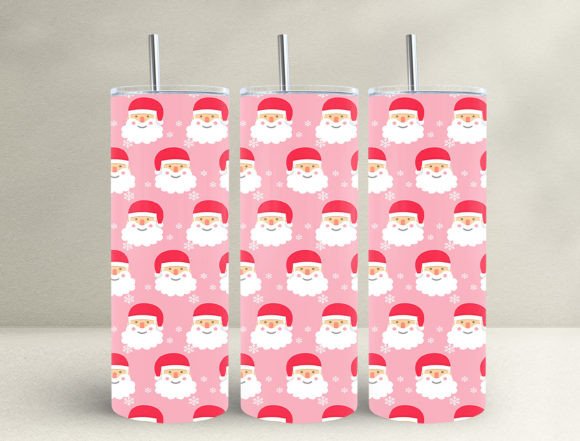
The holiday season brings a surge in demand for personalized drinkware, and among the most popular projects is the custom 20oz tumbler. For crafters and small business owners, selecting the right graphic asset is critical to the final product's quality. A 3D Santa Claus 20oz Tumbler Wrap represents a specific category of digital design that offers depth and visual interest distinct from flat, two-dimensional illustrations. Understanding what this format entails, how it compares to other design styles, and whether it fits your specific production workflow is essential before making a purchase or beginning a project.
Defining the 3D Aesthetic in Sublimation Designs
When researchers and creators refer to a "3D" design in the context of tumbler wraps, they are typically describing an image rendered with significant shading, highlighting, and perspective to create the illusion of depth. Unlike a cartoonish, flat vector where colors are solid and boundaries are sharp, a 3D Santa Claus design mimics real-world lighting. This approach makes the character appear as though he is popping off the surface of the cup.
The distinction lies in the rendering technique. These designs often utilize complex gradients and shadow layers that require high-resolution output to maintain clarity. A standard 3D Santa Claus 20oz Tumbler Wrap usually comes in high-definition formats, such as PNG files at 300 DPI (dots per inch). This resolution is non-negotiable for sublimation printing; anything lower may result in pixelation when stretched over the curved surface of a 20oz stainless steel tumbler. The "3D" effect relies on these fine details to sell the illusion, making file quality a primary evaluation factor.
Comparing Design Formats: 3D Renders vs. Flat Vectors
Choosing between a 3D rendered wrap and a flat vector illustration depends largely on the desired aesthetic and the application method. Both have their place in the crafting ecosystem, but they serve different visual purposes.
- Visual Depth: A 3D Santa Claus design provides a photorealistic or semi-realistic look that can make the tumbler feel like a premium, store-bought item rather than a DIY craft. Flat vectors, while charming and clean, often look more illustrative and less immersive.
- Color Blending: Sublimation excels at reproducing the gradual color shifts found in 3D renders. If you are using heat transfer vinyl (HTV) or printable vinyl with a cutter, intricate 3D shading can be difficult to weed or cut accurately. In this scenario, flat designs with distinct color blocks are often easier to process mechanically.
- Background Flexibility: Most 3D wraps come as PNGs with transparent backgrounds. This allows the crafter to place the Santa figure over various background patterns—such as snowflakes, plaid, or solid colors—without a white box surrounding the image. Flat vectors also offer this, but the integration of shadows in 3D designs requires more careful consideration of the underlying background color to ensure the lighting looks natural.
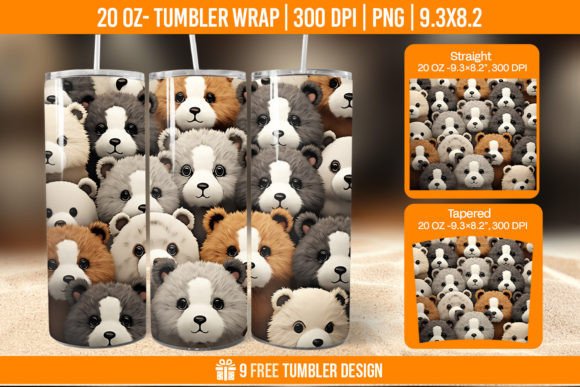
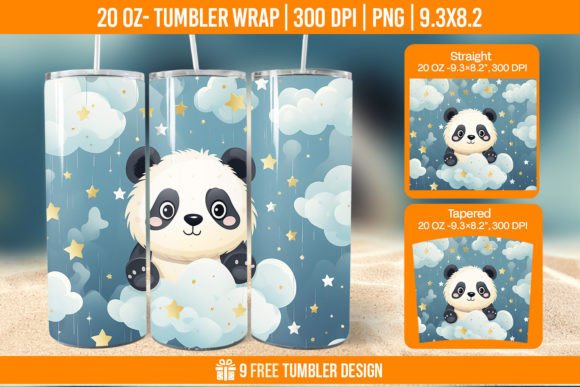
For those evaluating resources, it is important to note that 3D designs are generally raster-based (pixels), whereas flat designs are often vector-based (mathematical paths). While modern 3D wraps are provided at large print sizes (commonly around 9.3 x 8.2 inches) to accommodate 20oz tumblers, they cannot be infinitely scaled up without losing quality, unlike true vectors. However, for the specific dimensions of a standard tumbler, a 300 DPI PNG is entirely sufficient.
Tapered vs. Straight Wall: Understanding Shape Compatibility
A crucial technical consideration when downloading a 3D Santa Claus 20oz Tumbler Wrap is the shape of the tumbler itself. Not all 20oz tumblers are created equal. The market is dominated by two main profiles: straight wall and tapered.
Straight wall tumblers have vertical sides from base to rim. A rectangular design file works perfectly here, requiring no distortion. Tapered tumblers, however, are wider at the top and narrower at the bottom. If you apply a rectangular image to a tapered cup, the design will stretch and distort at the top, potentially ruining the 3D effect of the Santa figure. His face might appear elongated, breaking the illusion of realism.
High-quality digital shops often address this by providing two variations of the same design: one optimized for straight walls and one pre-distorted for tapered cups. When evaluating a product listing, checking for this dual-format inclusion is a sign of a well-researched resource. If only one shape is provided, the user must possess graphic design software skills to manually warp the image to fit the taper, which adds time and complexity to the workflow. For users seeking efficiency, ensuring the download includes both shapes is a practical necessity.
Material Applications Beyond Sublimation
While sublimation is the most common use case for these digital files, the versatility of a high-resolution PNG extends to other mediums. Crafters often evaluate designs based on their adaptability across different materials.
- Printable Vinyl: Users with inkjet printers and vinyl sheets can print the 3D Santa wrap and apply it to any colored tumbler, not just white or light-coated ones suitable for sublimation. The transparency of the PNG allows the tumbler's base color to show through if desired, though a white backing is usually preferred for color accuracy.
- Heat Transfer Paper: Similar to printable vinyl, this method allows for application on dark surfaces. The high DPI ensures that the fine details of the 3D rendering do not blur during the heat press process.
- Waterslide Decals: For a vintage or ultra-smooth finish, waterslide decals are an option. The 300 DPI resolution is critical here, as any graininess will be highly visible under the clear coat.
The limitation to keep in mind is that these are digital designs. No physical item is shipped. The value lies entirely in the file quality and the license terms. Users must have their own printing equipment or access to a print service. This distinguishes digital downloads from purchasing a pre-printed tumbler; the former offers customization control, while the latter offers immediate convenience.
Decision Factors: Is This Design Right for Your Project?
Selecting a 3D Santa Claus 20oz Tumbler Wrap involves weighing several factors against your specific goals. If your target audience appreciates realistic, detailed art, this style is superior to simplistic clip art. It conveys a sense of professionalism and effort.
However, there are tradeoffs. The complexity of 3D images means they can be busier. If you plan to add extensive text, such as names or dates, to the wrap, you must ensure the text remains legible against the detailed shading of the Santa figure. In contrast, a flat design with negative space might offer easier placement for typography.
Furthermore, consider the resizing capabilities. While many files are sold at a standard 20oz size, legitimate sellers often permit resizing to fit "skinny" tumblers (typically 16oz or 17oz). Because the source file is high resolution, scaling down rarely impacts quality. Scaling up, however, should be done with caution. Always check the pixel dimensions of the downloaded file before committing to a large batch production.
Final Thoughts on Digital Asset Selection
In the crowded marketplace of holiday crafting resources, the 3D Santa Claus 20oz Tumbler Wrap stands out for its ability to create immersive, high-end looking products. Its suitability depends on your equipment, the specific tumbler profile you are using, and your aesthetic preferences. By prioritizing high-resolution files, verifying shape compatibility (tapered vs. straight), and understanding the material limitations, crafters can make informed decisions that lead to successful, professional-grade results. Whether used for personal gifts or small business inventory, these digital tools offer a flexible foundation for creative expression, limited only by the imagination of the maker.